









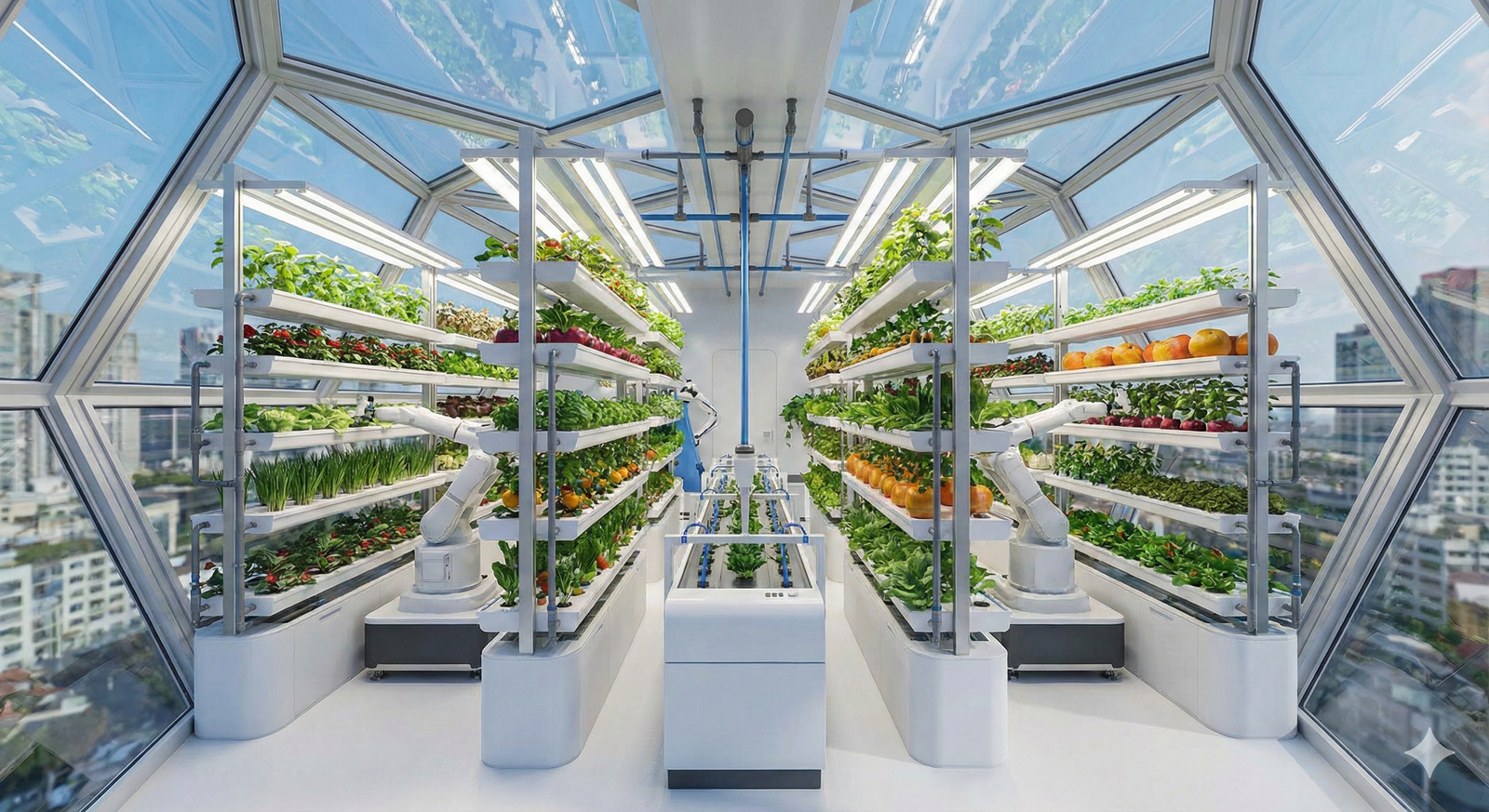
The Carbon Footprint Quotient: IoT and the Ethics of Sustainability in Schools
How the Phygital Gurukul Tracks Eco-Literacy and Resource Sovereignty in Real-Time

Sustainability in schools has traditionally been a "Token Green" effort—a few posters on the wall or a one-time tree-planting event. But in the 2026 educational landscape, the Carbon Footprint (CFQ) has become a vital metric for institutional health. Through the ViSE™ framework, we are moving beyond awareness toward Sustainability Coherence, where a school’s environmental impact is tracked, managed, and used as a live learning laboratory.
The NEP 2020 and SQAAF mandate emphasize the need for value-based education rooted in a connection to nature. By integrating IoT sensors and circular economy principles, ViSE™ turns Carbon Footprint Quotient (CFQ) tracking into a core component of a student's Holistic Progress Card (HPC).
The CFQ: Real-Time Environmental Intelligence
Unlike manual estimates, the ViSE™ system uses InfiniOX IoT sensors and smart metering to provide a dynamic view of the school’s ecological soul:
Energy Tracking: Monitoring real-time usage and the efficiency of integrated solar grids.
Waste & Water Management: Tracking the output of Gober Gas plants (Goberdhan) and the efficiency of water restoration systems.
Eco-Literacy Badges: Students earn certifications by participating in soil sovereignty projects and maintaining micro-forests in the GROW Garden.
Symbion Synthesis: The SYMBION™ AI core translates these environmental data points into holistic student well-being metrics.
The Operational Verticals of Restoration
To improve CFQ scores and reach Platinum Band certification, schools activate specialized operational verticals:
ROW (Restoration of World): Focuses on renewable infrastructure, water management, and waste-to-energy projects.
GROW (Grow Your Own Wealth): Utilizes edible landscapes and sensory gardens where students engage with soil-moisture IoT kits.
LNC (Lines N Curves): Ensures that the smart architecture of the school is designed for maximum energy efficiency and IoT integration.
A Roadmap for the New Bharat
Achieving a high CFQ is a key indicator of Institutional Excellence during the Saarthi 360° Readiness Audit. It signals to parents and the community that the school is not just teaching about the future, but actively engineering a resonant ecosystem where Mindset, Medium, and Environment are one. This is Institutional Intelligence in action—building schools that are accessible, affordable, and scalable for a sustainable tomorrow.
ViSE
More from ViSE

The Currency of Character: How ...
23 Dec 2025
The Phygital Gurukul: A Day in ...
2 Feb 2026
The Social Health Score: ...
2 Feb 2026
Comments
Subscribe to Our Newsletter


Take the First Step Towards Phygital Civilization!
Find your PathwaysSaarthi
Initialise Audit Become a SEED Fellow Become a Master Create your own Space Publish with iViRTHContact Us

.png)
Reply to Comment